

-
Panel interviews assess candidates from multiple perspectives in a single session, improving hiring speed and consistency while reducing bias.
-
Strong preparation includes researching panel members, practising STAR-based answers, and aligning responses with each interviewer’s focus.
-
Use concise, measurable examples to answer behavioural, technical, and situational questions effectively.
-
Engage all panel members equally with confident body language, clear communication, and thoughtful questions.
-
Follow up within 24 hours with personalised messages to reinforce interest and leave a strong final impression.
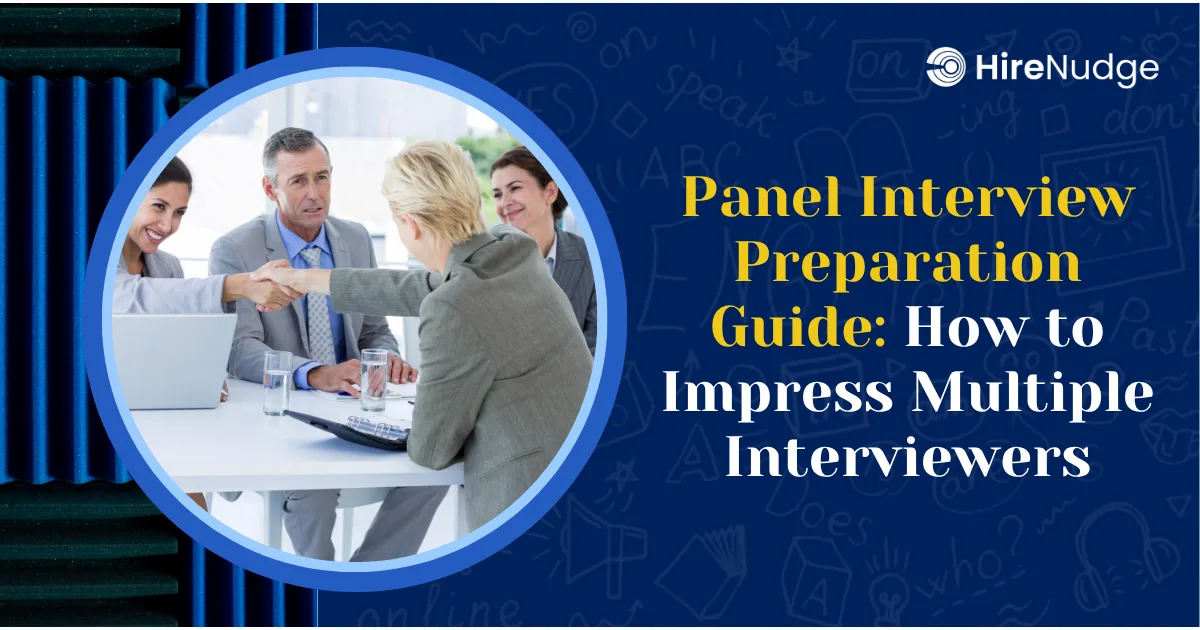
A panel interview is one of the most common interview formats used by employers to assess candidates from multiple perspectives. Instead of meeting one interviewer, you speak with an interview panel consisting of hiring managers, team members, HR professionals and other stakeholders.
As hiring becomes more structured in 2026, panel interviews will help companies make faster and fairer hiring decisions while giving candidates the opportunity to showcase their skills to key decision-makers in a single meeting.
How Are Panel Interviews Changing the Hiring Process in 2026?
- Many organisations now use panel interviews to improve hiring consistency and reduce individual interviewer bias.
- Hybrid hiring models have increased the use of virtual panel interviews.
- Structured hiring processes often include an interview scorecard for objective candidate evaluation.
- AI-powered note-taking tools are becoming common during hiring discussions.
- Companies increasingly assess technical ability, cultural fit, and remote-work readiness in a single interview process.
- Many global employers in Canada, Australia, Germany, and the UAE now rely on hiring panel discussions before making final hiring decisions.
HireNudge Insight: Structured panels combined with scorecards help organisations make more consistent hiring decisions while providing candidates with a fair evaluation process.
What Is a Panel Interview and Why Do Employers Use It?
A panel interview is a hiring process in which several interviewers assess a candidate together. Employers use this format to gather diverse opinions, improve decision-making, and speed up recruitment.
Who Participates in a Panel Interview?
A typical interview panel may include:
- Hiring Manager
- HR Representative
- Team Lead
- Department Head
- Future Colleague or Peer
Each person evaluates different aspects of a candidate’s suitability for the role.
Common Types of Panel Interviews
- Group Panel Interview: Multiple interviewers question the candidate together.
- Serial Panel Interview: Candidates meet different panel members one after another.
- Hybrid Panel Interview: Some interviewers attend in person while others join virtually.
Serial vs Group Panel Interviews
| Feature | Serial Panel | Group Panel |
| Format | Multiple rounds | Single session |
| Duration | Longer | Shorter |
| Decision Speed | Moderate | Faster |
| Candidate Experience | Repetitive questions possible | More collaborative |
Benefits for Employers
- Better candidate evaluation
- Reduced hiring bias
- Faster decision-making
- Multiple perspectives on candidate fit
- Improved quality of hire
Benefits for Candidates
- Fewer interview rounds
- Opportunity to connect with multiple stakeholders
- Faster hiring outcomes
- Better understanding of team dynamics
Global Hiring Considerations
In Canada and Australia, panels often include future team members. In Germany, interviews may focus heavily on technical expertise. In the UAE, senior leadership participation is more common for managerial roles.
| Expert Takeaway: Structured panels improve cross-functional fit assessment and explicitly list scoring criteria to increase fairness. |
How Should Candidates Prepare for a Panel Interview?
Successful panel interview preparation starts with understanding the role, researching the panel members, practising STAR stories, and preparing thoughtful questions for each interviewer.
One Week Before the Interview
Start by researching:
- Company mission and values
- Recent company news
- Job description requirements
- LinkedIn profiles of panel members
Understanding each person’s role helps you anticipate potential questions for the panel interview.
48 Hours Before the Interview
Create an interview preparation checklist:
- Review your resume.
- Prepare 6-8 STAR stories.
- Research competitors and industry trends.
- Prepare questions for the panel.
- Practice concise responses.
24 Hours Before the Interview
Focus on logistics:
- Confirm interview timing.
- Prepare documents.
- Choose professional attire.
- Test technology for a virtual panel interview.
Using the STAR Method
The STAR Method helps structure strong responses:
- Situation: Describe the challenge.
- Task: Explain your responsibility.
- Action: Detail what you did.
- Result: Share measurable outcomes.
Sample STAR Answers
Leadership Example
- Situation: A project was behind schedule.
- Action: I reorganised priorities and improved communication.
- Result: The team delivered the project one week early.
Problem-Solving Example
- Situation: Customer complaints increased.
- Action: I analysed feedback and introduced process improvements.
- Result: Complaints decreased by 30%.
Teamwork Example
- Situation: Cross-functional teams had communication issues.
- Action: I created weekly alignment meetings.
- Result: Project delivery improved significantly.
Body Language Tips
- Make eye contact with every panel member.
- Avoid focusing on only one interviewer.
- Maintain a confident posture.
- Listen carefully before answering.
Also Read: Auditor Resume Examples, Template & Writing Guide
| Expert Takeaway: Map STAR stories to panellists’ likely priorities (technical to peers, culture to HR) to tailor responses. |
What Questions Are Common in Panel Interviews and How Should You Answer Them?
Most panel interview questions focus on behaviour, technical skills, problem-solving ability, teamwork, and cultural fit. The strong panel interview answers are concise, measurable, and supported by real examples.
Behavioural Interview Questions
These assess how you’ve handled situations in the past.
Question 1: Tell us about a challenging project.
Snippet-Ready Answer:
“I led a project that faced a tight deadline and resource constraints. By prioritising critical tasks and improving team coordination, we delivered on time and exceeded performance targets by 15%.
Question 2: Describe a conflict you resolved.
Focus on:
- The problem
- Your actions
- Positive outcome
Question 3: Tell us about a mistake you made.
Show:
- Accountability
- Learning mindset
- Process improvement
Technical Questions
Question 4: Explain a project you’re proud of.
Discuss:
- Your contribution
- Technical decisions
- Business impact
Question 5: How do you solve complex problems?
Demonstrate:
- Analytical thinking
- Structured approach
- Real-world examples
Situational Questions
Question 6: What would you do if priorities suddenly changed?
Snippet-Ready Answer:
“I would reassess deadlines, communicate with stakeholders, prioritise high-impact tasks, and ensure the team understands the revised objectives to minimise disruption.”
Question 7: How would you handle disagreement with your manager?
Show professionalism, communication skills, and willingness to collaborate.
Culture Fit Questions
Question 8: Why do you want to work here?
Connect:
- Company values
- Career goals
- Relevant experience
Question 9: How do you work in teams?
Highlight collaboration, adaptability, and communication.
Questions You Can Ask the Interview Panel
- What does success look like in this role?
- What challenges is the team currently facing?
- How is performance measured?
- What opportunities exist for growth?
- How would you describe the team culture?
| Expert Takeaway: Prioritise clear outcomes and metrics in answers; quantifiable results outperform vague claims. |
What Are the Best Practices for Interviewers Running a Panel Interview?
An effective panel interview uses structured questions, clear interviewer roles, objective scoring criteria, and consistent methods to improve the quality of the hiring process.
Before the Interview
Interviewers should:
- Define evaluation criteria.
- Assign questions to each panel member.
- Review candidate resumes.
- Create a shared interview scorecard.
Interviewer Checklist
- Review candidate profile.
- Prepare role-specific questions.
- Avoid duplicate questions.
- Take structured notes.
- Use consistent scoring.
Interviewer Panel Etiquette
Good interviewer panel etiquette includes:
- Introducing all panel members.
- Allowing candidates time to answer.
- Avoiding interruptions.
- Maintaining professional behaviour.
- Ending with clear next steps.
Reducing Hiring Bias
Organisations can improve fairness by:
- Using structured questions.
- Applying the same scoring criteria to all candidates.
- Holding calibration discussions after interviews.
- Documenting hiring decisions.
| Expert Takeaway: Use objective scoring and calibration meetings to ensure consistent hiring decisions across panels. |
How Do Virtual Panel Interviews Differ and What Tech Tips Help?
A virtual panel interview requires the same preparation as an in-person interview but adds technical and communication challenges. Candidates must ensure their technology works smoothly while maintaining strong engagement with all panel members.
Types of Virtual Panel Interviews
Live Video Panel
All interviewers and candidates join a video call simultaneously via platforms such as Zoom or Microsoft Teams.
Asynchronous Video Interview
Candidates record responses to pre-set questions, which are later reviewed by the hiring panel.
Hybrid Panel Interview
Some interviewers attend in person while others participate remotely.
Virtual Panel Interview Checklist
- Test your internet connection.
- Check camera and microphone quality.
- Join 10 minutes early.
- Use a professional background.
- Keep a backup device available.
- Close unnecessary applications.
Quick Tech Fixes
- Poor audio? Use headphones.
- Weak internet? Move closer to the router.
- Video lag? Turn off HD video.
- Platform issue? Switch to mobile as a backup.
- Connection loss? Rejoin immediately and notify the panel.
| Expert Takeaway: Assign a dedicated moderator for virtual panels to keep time and eliminate cross-talk. |
How Should Candidates Follow Up After a Panel Interview?
Send a personalised interview follow-up email within 24 hours. Thank the panel, reinforce your interest in the role, and briefly mention a key discussion point.
Why Follow-Up Matters
A thoughtful follow-up demonstrates:
- Professionalism
- Interest in the position
- Strong communication skills
- Attention to detail
Short Follow-Up Email Template
Subject: Thank You for the Interview
Hi [Name],
Thank you for taking the time to meet with me today. I enjoyed learning more about the role and the team. Our discussion about [specific topic] further strengthened my interest in the opportunity.
I appreciate your consideration and look forward to hearing about the next steps.
Best regards,
[Your Name]
LinkedIn Follow-Up Example
Hi [Name],
Thank you for speaking with me during the interview process. I enjoyed our discussion and appreciated your insights about the team and role. I look forward to staying connected.
When Should You Follow Up Again?
- First thank-you email: Within 24 hours
- Status follow-up: 5-7 business days later
- Final check-in: After the expected decision date
Also Read: Google Embedded Interview Behavioural Round: Guide Now
| Expert Takeaway: Personalise each follow-up to each panellist to reinforce the connection and leave a memorable impression. |
What Are Common Mistakes to Avoid in Panel Interviews?
The biggest mistakes in a Panel Interview include poor preparation, rambling responses, ignoring certain panel members, and failing to provide measurable examples.
Top 10 Mistakes Candidates Make
- Not Researching the Panel: Learn who will be interviewing you and understand their roles.
- Focusing on Only One Interviewer: Maintain eye contact with the entire interview panel.
- Giving Long-Winded Answers: Keep responses concise and structured.
- Skipping STAR Examples: Use the STAR Method whenever possible.
- Not Preparing Questions: Always have thoughtful questions ready.
- Poor Body Language: Avoid slouching, fidgeting, or appearing disengaged.
- Lack of Role Knowledge: Understand the company, industry, and job requirements.
- Speaking Negatively About Previous Employers: Maintain professionalism.
- Forgetting Follow-Up: A missed interview follow-up email is a missed opportunity.
- Failing to Clarify Next Steps: Ask about the hiring timeline before leaving.
| Expert Takeaway: Rehearse concise, metric-driven answers and a 30-second personal pitch tailored to panel composition. |
How Do Employers Score and Decide After a Panel Interview?
Most employers use an interview scorecard to evaluate candidates against predefined competencies before making a final hiring decision.
Common Evaluation Criteria
| Competency | Suggested Weight |
| Technical Skills | 40% |
| Culture Fit | 25% |
| Communication | 20% |
| Growth Potential | 15% |
How Candidate Evaluation Works
After the interview:
- Each panel member submits ratings.
- Scores are reviewed collectively.
- Strengths and concerns are discussed.
- A final recommendation is made.
Common Red Flags
- Inconsistent answers
- Poor communication
- Lack of preparation
- Weak teamwork examples
- Inability to explain achievements
Sample Scorecard Row
| Skill | Rating | Notes |
| Problem Solving | 4/5 | Strong examples with measurable outcomes |
| Expert Takeaway: Weight competencies by role-criticality and document calibration rationale to reduce bias. |
What Are Example Panel Interview Questions by Role?
Role-specific panel interview questions help candidates prepare for real workplace scenarios while allowing interviewers to assess role-critical skills, problem-solving ability, and team collaboration.
Engineering Roles
High-ROI Questions
| Question | Intent | Difficulty |
| Tell us about a technical problem you solved. | Problem Solving | Medium |
| How do you handle production issues? | Technical Skills | Hard |
| Describe a project you’re proud of. | Project Ownership | Medium |
| How do you ensure code quality? | Best Practices | Medium |
Model Answer (Snippet Ready)
“I identified a system bottleneck, optimised database queries, and reduced response time by 40%, improving overall user experience.”
Follow-Up: How did you measure the impact?
Sales Roles
High-ROI Questions
| Question | Intent | Difficulty |
| How do you handle client objections? | Communication | Medium |
| Describe your biggest sales win. | Performance | Medium |
| How do you build client relationships? | Relationship Management | Easy |
| How do you achieve sales targets? | Results Orientation | Medium |
Model Answer (Snippet Ready)
“I focus on understanding customer concerns first and then position solutions that directly address their business goals.”
Follow-Up: Can you share a recent example?
Product Management Roles
High-ROI Questions
| Question | Intent | Difficulty |
| How do you prioritise features? | Decision Making | Hard |
| Describe a successful product launch. | Product Strategy | Medium |
| How do you handle stakeholder conflicts? | Collaboration | Hard |
| How do you measure product success? | Analytics | Medium |
Model Answer (Snippet Ready)
“I prioritise features based on customer impact, business value, and implementation effort to maximise outcomes.”
Follow-Up: What framework do you typically use?
Human Resources Roles
High-ROI Questions
| Question | Intent | Difficulty |
| How do you resolve workplace conflicts? | Employee Relations | Medium |
| How do you improve engagement? | Culture Building | Medium |
| Describe a difficult hiring decision. | Recruitment | Hard |
| How do you handle employee complaints? | Problem Resolution | Medium |
Model Answer (Snippet Ready)
“I encourage open communication, identify root causes, and work toward solutions that support both employees and organisational goals.”
Follow-Up: Can you share a real-world example?
Leadership Roles
High-ROI Questions
| Question | Intent | Difficulty |
| Describe a time you led change. | Leadership | Hard |
| How do you motivate teams? | People Management | Medium |
| How do you handle underperformance? | Coaching | Hard |
| How do you make strategic decisions? | Business Acumen | Hard |
Model Answer (Snippet Ready)
“I led the implementation of a new workflow system that increased team productivity by 25% within six months.”
Follow-Up: How did you manage resistance to change?
| Expert Takeaway: Practise both role scenarios and cross-functional collaboration examples to impress multi-disciplinary panels. |
How Does HireNudge Help You Get a Panel Interview?
Landing a Panel Interview requires more than just submitting applications. Recruiters look for candidates with strong resumes, optimised profiles, and job-ready interview skills.
HireNudge provides AI-powered tools that help you stand out, get shortlisted, and perform confidently throughout the hiring process.
Create a professional, ATS-friendly resume tailored to your target role. The AI Resume Builder helps highlight your skills, achievements, and experience in a format recruiters prefer.
- Résumé Optimiser
Improve your resume’s chances of passing applicant tracking systems (ATS). The Resume Optimiser analyses your resume, identifies gaps, and provides recommendations to increase interview opportunities.
- AI Job Matcher
Stop applying blindly. The AI Job Matcher recommends jobs that align with your skills, experience, and career goals, helping you focus on opportunities where you’re most likely to succeed.
Manage all your applications in one place. Track application status, interview schedules, recruiter responses, and follow-ups without losing track of important opportunities.
Connect with recruiters, hiring managers, and referral contacts more effectively. HireNudge helps you reach decision-makers and improve your chances of securing interviews faster.
Why HireNudge Matters for Panel Interview Success
A successful Panel Interview starts long before the interview itself. By helping you build a stronger resume, find relevant opportunities, optimise applications, and stay organised throughout your job search, HireNudge increases your chances of getting shortlisted and advancing to the interview stage.
Whether you’re a fresher, career switcher, or experienced professional, HireNudge gives you the tools needed to secure more interviews and move closer to your next career opportunity.
Conclusion
A Panel Interview can feel challenging because multiple interviewers evaluate you simultaneously, but with the right preparation, it becomes an opportunity to showcase your skills, experience, and professionalism. Focus on strong panel interview preparation, use the STAR Method, provide measurable examples, and engage confidently with every panel member.
Remember that success is not about having perfect answers; it’s about demonstrating clear communication, problem-solving ability, and a genuine fit for the role. With consistent practice and the right tools, you can approach your next Panel Interview with confidence and significantly improve your chances of getting hired.
Don’t leave your job search to chance. HireNudge helps you build ATS-friendly resumes, optimise your profile, discover relevant opportunities, and stay on top of every application with powerful AI-driven career tools.
Whether you’re a fresher entering the job market, a professional planning a career switch, or someone looking for new opportunities after a layoff, HireNudge gives you everything you need to get noticed by recruiters and secure more interviews.
Create a standout resume, find the right jobs faster, and take the next step toward your dream career with HireNudge today.
Why HireNudge?
At HireNudge, we believe job searching shouldn't feel like a full-time job. Our platform streamlines every step - from crafting your profile to landing interviews - so you can focus on what truly matters: finding the right fit.
 Published byDivya PandeyContent Marketing Specialist
I am a Content Writer and SEO professional with a background in journalism and hands-on experience in digital media. I specialize in creating high-readability, SEO-driven content backed by keyword research and competitor analysis. With experience across platforms, I have built a strong ability to create engaging, user-focused content while managing deadlines in fast-paced environments. I am passionate about storytelling, trend-driven content, and using data to create impactful digital experiences.
Frequently Asked Questions
Common questions about HireNudge and our services
Recommended Articles
Explore more of our latest stories and insights from the team
Resume Objective Examples vs What Is Resume Summary
Resume Objective Examples Vs What is resume summary, which one deserve the top spot on your resume in 2026? The right choice depends on your experience, career goals, and the story you want recruiters to see. A resume objective focuses on where you want to go, while a resume summary highlights what you already bring […]
How To Apply Application For Job: 7 Steps to Get Hired Today
Landing the right role starts long before the interview. How to apply application for job successfully means knowing where to look, how to apply for a job, and how to make every application count. A job search begins with roles that match your skills and goals, not endless applications sent on autopilot. Before you start […]
Skills for Resume 2026: Top Skills to List & ATS Tips
Your resume can have great experience, but the wrong skills for resume can make it easy to overlook. Recruiters and ATS tools look for skills that match the role, show real capability, and fit the changing needs of the workplace. In 2026, employers increasingly value a mix of AI literacy, data skills, technical expertise, adaptability, […]